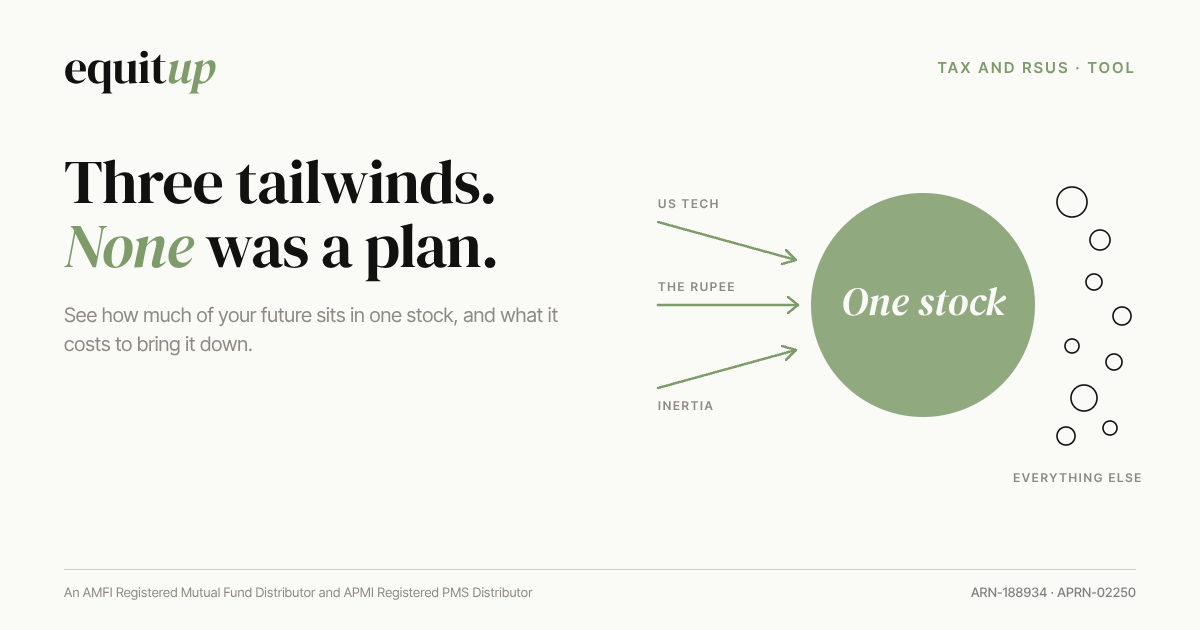
Three tailwinds built your position.
None of them was a plan.
You took the offer partly for the stock. Over the years it vested, quietly, in dollars. You rarely sold, because selling meant tax, and because the company kept delivering. Today that single holding is the largest thing you own.
It got there on three tailwinds, and it is worth being honest about each.
The first was the run in US technology. The NASDAQ 100 rose roughly 95% over the last five years. You were paid in the strongest corner of the global market, at close to the best possible time.
The second was the rupee. As it moved from about ₹74 to ₹95 to the dollar, your holding grew about 28% in rupee terms without the stock moving at all.
The third was inertia. Holding was easier than deciding, and for years it was rewarded.
None of this was a strategy. It was a fortunate position, and fortunate positions are the ones most worth examining, because the same three forces can run in reverse. A pause in US tech, a firmer rupee, and one concentrated bet can undo years of gains in a single quarter.
The question is not whether the company is good. It is whether this much of your future should sit in one stock, in one currency, in one market, when US technology now trades near the top of its historical valuation range and a broadly diversified Indian portfolio trades closer to its long term average.
Now see it in your own numbers.
Enter your position. The tool shows your concentration today, and what it costs in tax to bring it down.