What this calculator does
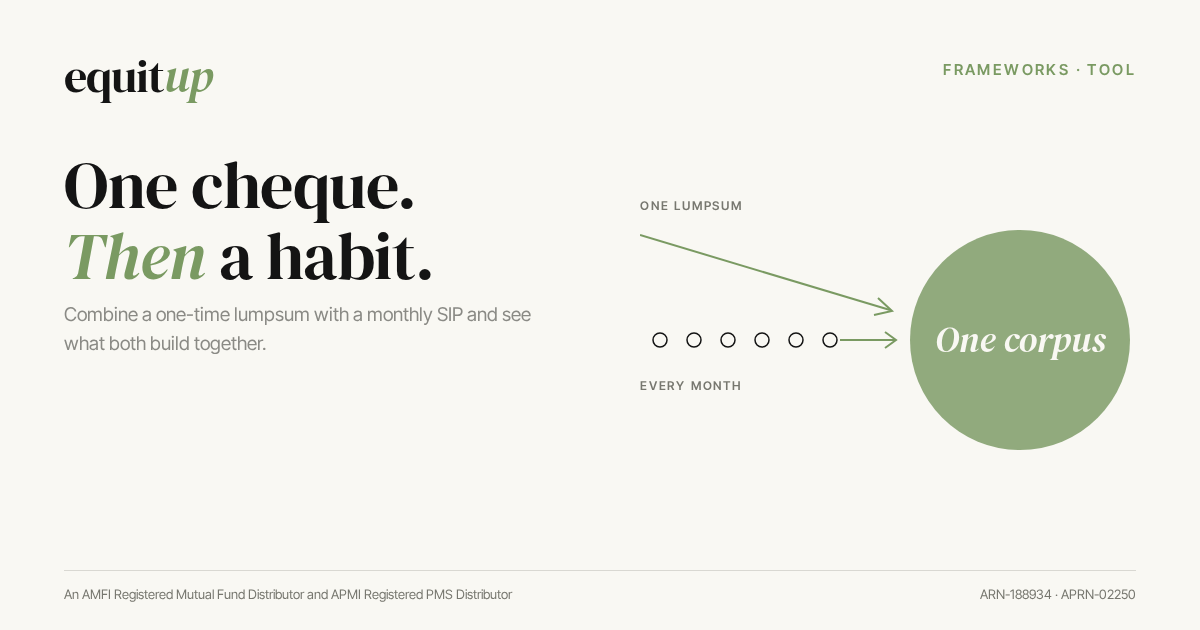
Many investors start with money already saved, such as a bonus, a matured deposit or proceeds from a sale, and then continue with a monthly SIP from income. This calculator projects both parts together so you can see the combined outcome in one place.
The lumpsum grows at the annual return you enter, compounded once a year and expressed as an equivalent monthly rate so it lines up with the SIP. The SIP uses the standard formula: each instalment goes in at the start of the month and compounds monthly at one twelfth of the annual return. The final value is simply the two added together.
How to read the result
The figures split what you invest into the lumpsum and the SIP, and show the estimated returns on top. The bar shows how much of the final value comes from each part. A large lumpsum dominates early on; over long periods the steady SIP often catches up, because it keeps adding fresh money every month.
The year-by-year table lists the amount invested so far and the estimated value of each part at the end of every year. The chart compares the projected value with the money you put in, so the gap between the two lines is the estimated growth.
Use it as a guide, not a promise
Returns in real markets move up and down. Try a few return rates to see a range of outcomes before deciding how much to invest at once and how much to spread out.
Frequently asked questions
- Why combine a lumpsum with a SIP?
- A lumpsum puts money you already have to work immediately, while a SIP adds to it from your monthly income. Together they let both your savings and your cash flow compound.
- How is the lumpsum grown in this calculator?
- It compounds annually at the return you enter, expressed as an equivalent monthly rate so it lines up with the monthly SIP.
- Are these returns guaranteed?
- No. The calculator applies one constant rate. Actual mutual fund returns vary and can be negative in some years.